That though I walk through the valley of the shadow of death
Your rod and your staff comfort me
I will fear no evil
For you are with me. .
I’m starting to learn
That it will be OK
Doesn’t mean a life of ease
And simple answers .
But rather a grit
A determination
That despite the odds
Giving up is not an option .
So God I ask you
To remove the pain, the memories
Of moments I’d rather forget
Of heartbreak and anguish .
When I questioned your light
Your kindness
Your goodwill
And even your existence .
I ask you God
To bring good out of what was meant for evil
To bring healing from where wounds have struck
To bring hope instead of mourning .
I pray for a new day
Where light shines forth
And good conquers all
Where those who sow in tears
Will reap with songs of joy .
Because only those who have walked such pain know
How deep the depths of sorrows go
And how very much they need
A fresh new tomorrow. .
This poem speaks to the season of Cayden’s brain damage. It was the most challenging season I have ever walked. We didn’t know if our son would ever engage with us again, yet we had to faithfully continue to look after him, feed him, give him medicines, be up 12 times a night with him – not knowing if it would ever change and if we could sustain that kind of life long term. It raised a lot of faith questions for me. After coming through that season, I became desperate to emotionally separate from it. To be able to let those moments go and find a fresh, new tomorrow – one that is not weighted down by the agonising memories of yesterday.
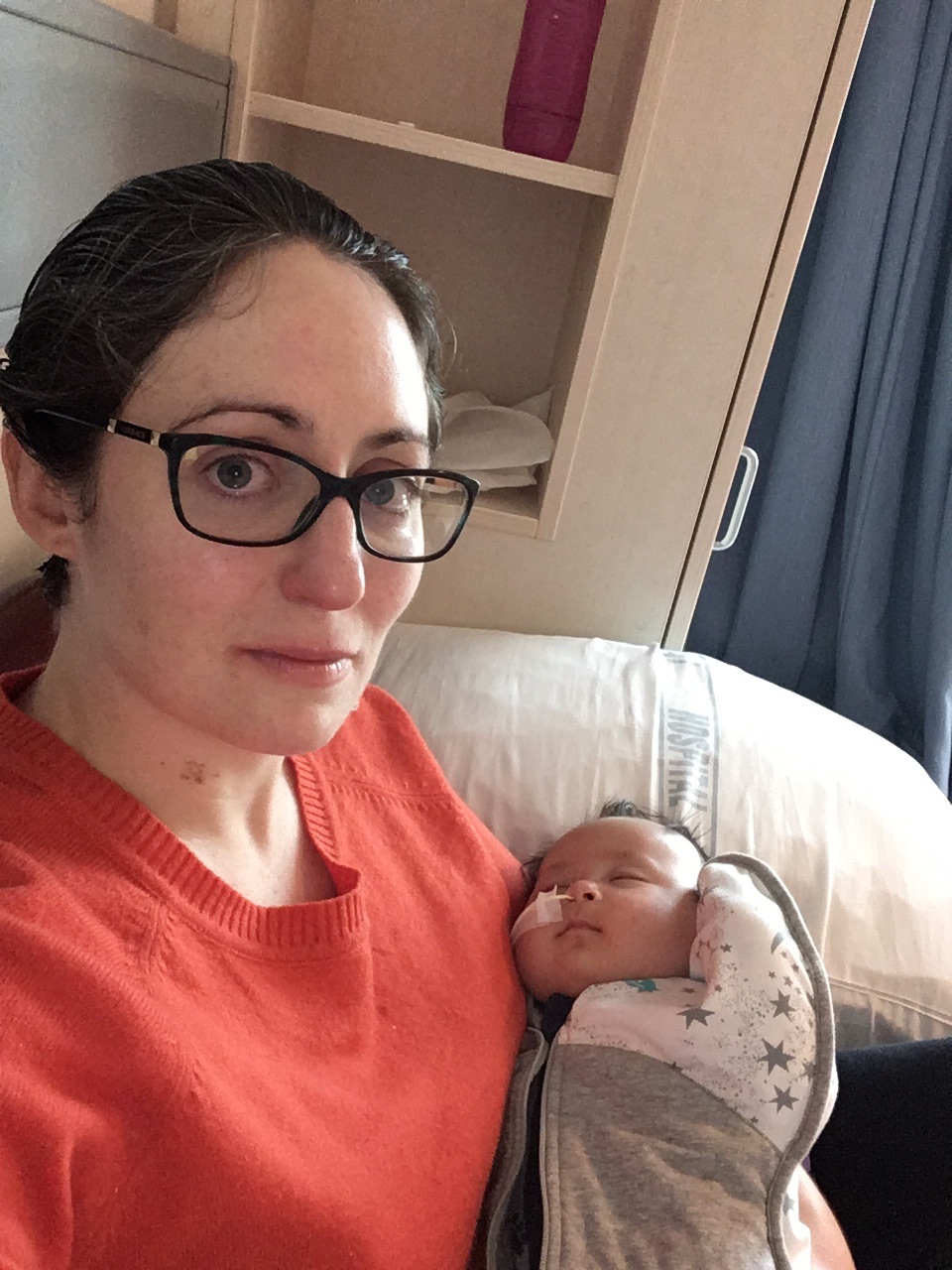
For those who’ve wondered what being in hospital 74 days is like…..
It’s waking up in the morning, not because you want to, but because you have people in your room and you only have so long to shower and dress before all the doctors arrive.
It’s not sitting on the toilet seat… for months… because who knows who else has sat there and when it was last cleaned?
It’s not knowing what’s on the menu for that day – or actually, pretty soon it’s knowing EVERYTHING on the menu – ANY day!
It’s finding yourself in a hallway discussing your toiletry habits with a middle aged, black African male nurse, before you realise how institutionalised you have become that it just felt “normal” – “Yes, I’m just racing to have a quick shower, then I’ll be back in the room and we’ll change his nappy to weigh it, strip him down, weigh him, give his morning meds and prepare for the doctors to arrive”.
It’s being woken up all through the night…all the time… with lights on… with nurses being so rough changing your son’s nappy they wake him and you… with monitors alarming and you’re flying out of bed to check them… with nurses shining their cell phone lights in your face… with helicopters coming and going all night… with rubbish trucks slamming over the jutter bars through the night… with cleaners on machinery in the halls at 5:30am… with other screaming children… with nurses putting a hand on your shoulder and startling you awake because they want you to express another 5ml for the next feed which is in three hours, not knowing they just woke up a bear who was in desperate need of sleep…
It’s not knowing how to walk one more situation of conflict with staff who often don’t seem to know the hell what they’re doing… like the nurses who openly admit they haven’t read your son’s notes. They don’t know he is a highly complex cardiac baby and so it’s listening to nurses flood the room looking at his oxygen saturation going, “It shouldn’t be dropping this fast.” And you’re sitting on the bed finally succumbing to tears because you’re freaked out of your mind at their reactions, wondering what’s going wrong – until you find out – hours later – that the nurses didn’t know he was a cardiac baby so put him on oxygen when he never should have been. And you realise in that moment to trust no one. Unless they seem really knowledgeable – and have actually read your son’s information file!
It’s getting used to telling nurses information or instructions – and having the opposite happen… fifteen minutes later.
It’s learning to tell your story… over… and over… and over… again.
It’s learning to speak “medical speak” like you know what you’re talking about… although… pretty soon you do!
It’s talking to eight different specialist teams and realising most of them see YOU as the central point – “What did the cardiac specialists say?” “What did the respiratory specialists say?” You realise it doesn’t matter how overloaded, how overwhelmed, how exhausted or frankly even how terrified of your son’s health you are – you are the central cog seen as the fount of constant information at everyone else’s mercy – you don’t get to choose how often you have these conversations, or when.
It’s learning no time is EVER your own. You don’t control who walks through your room. Whether you like them. Or not. Whether anyone will ever actually ask – “How are YOU?”
You learn not to bother with things like moisturing your hands or flossing in your room at night, because you should only do them if you’re willing to have an audience at a split second’s notice.
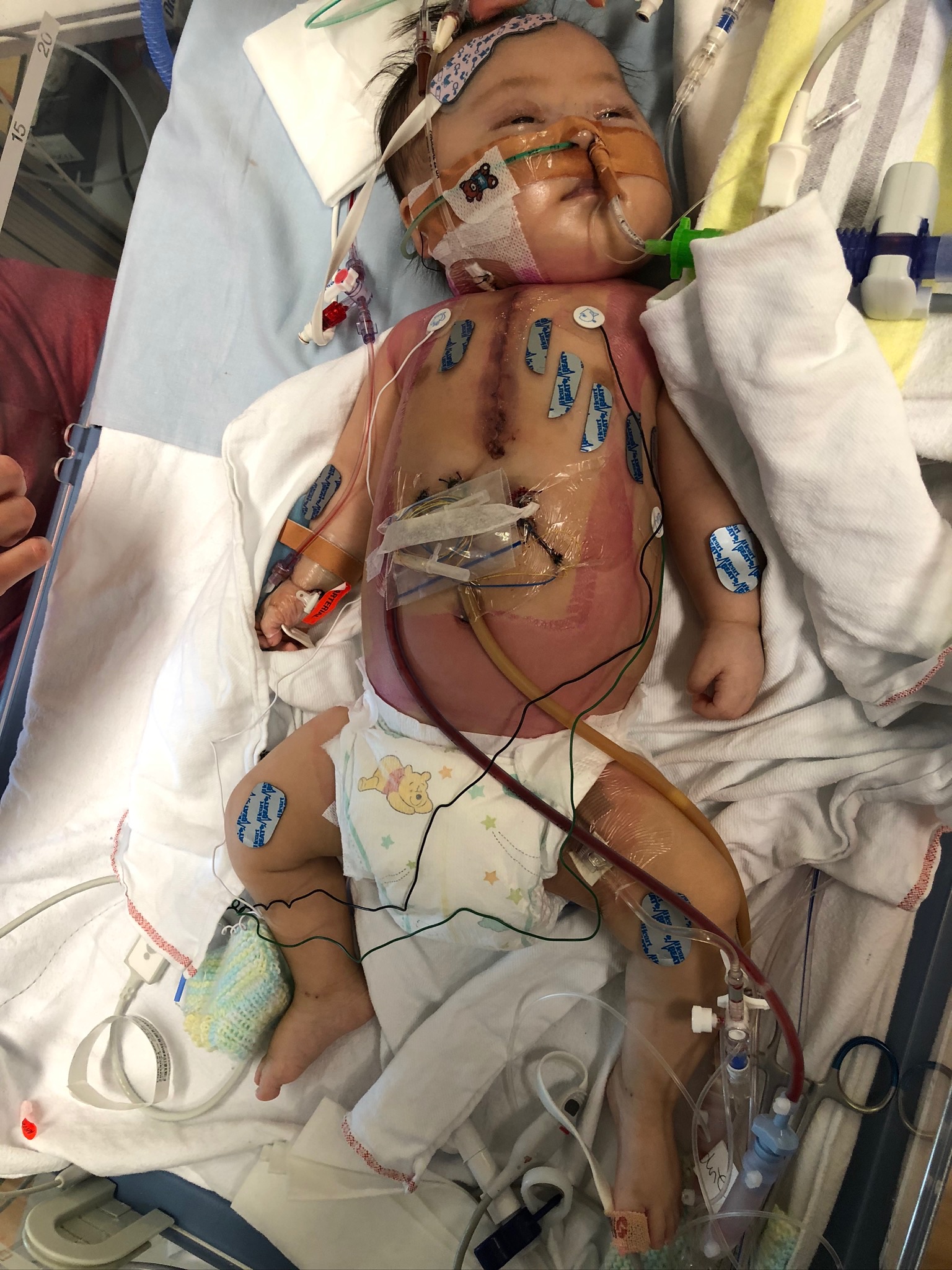
It’s hearing things like, “Your son has heart failure. Your son has fluid build up on the lungs. Your son has pneumonia. Your son has combined bronchiolitis, parainfluenza and rhinovirus.”
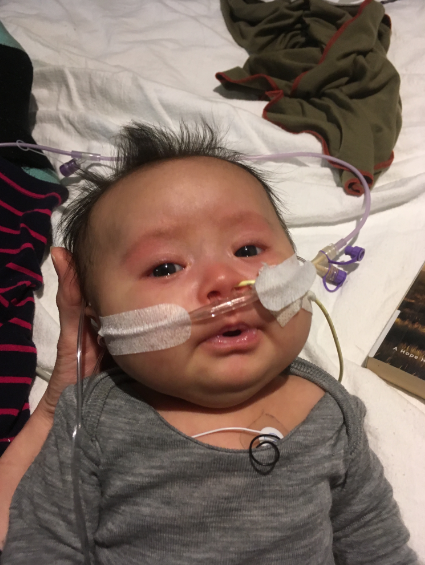
Or my personal favourite – “We’re going to break your son’s bones and stop his heart in heart surgery.” And you stare at your husband, neither of you showing any emotion. Your husband suddenly jumps up to stare at your small, innocent son, struggling on a cot just to survive where he is fed continuously through a nasal gastric tube.
And you know there’s a chance. There is a chance this could be your last night with him. And you can’t even begin to process that.
It’s holding back the tears and emotions until the surgeon leaves the room and knowing the countdown to surgery the next morning has begun.
And then –finally – letting yourself breathe… and cry. And then it’s watching while your son vomits bright yellow bile, and the nurse you hate walks in. She sees you, and your son, and flippantly states, “Oh I wouldn’t bother worrying about a little thing like that.”
And you’re staring at her, going “Do you know my son has HEART SURGERY tomorrow?”
“Oh, yes.”
And you have no energy left to care that this woman doesn’t have a clue. And you are so spitting angry at her insensitivity that you have to walk out of the room, and the evening you envisioned of holding your son close and talking to him has just evaporated, because you’re too angry to want to taint your son with your emotions the night before you could lose him. Knowing that any “little thing like that” could change whether your son HAS the life saving surgery in the morning, as so many other “little things like that” have changed the surgery date so far.
It’s the constant terror of not knowing… if your son will survive… if your son that has been SO strong so far, can continue to be strong, when he has given so much already and gone through so much…
It’s wondering for yourself. If YOU can survive this, when YOU have already seen and watched too much.
The 50 odd blood tests. The people squeezing your little’s baby delicate heel like it’s a stress ball, determined to ooze out enough droplets of blood. Then finding they squeezed it TOO hard and the blood separated (don’t ask me) and so they got a false reading… and they have to do it… again… and again… and again.
It’s fleeing the room because you just can’t watch one more traumatic procedure on your son. You can’t comfort him one more time as they hurt him (while trying to help him) because your own heart is breaking in two watching this happen, over… and over… again.
It’s wondering when things will ever get easier.
And finally, not even wondering that anymore.
It’s night-time conversations with God, saying, “I know You’re there. But frankly, I don’t have anything to say to You right now.”
It’s Heaven-flung violent, tear soaked pleas when your son stopped breathing and his oxygen levels dropped to 15/20% POST heart surgery – “God, please, SAVE MY SON!”
And it’s surrender and resignation all in the next breath, whispered – “God… please… save my son. But not my will, but yours be done.”
It’s feeling your heart break, a thousand million times, and not knowing if you will EVER feel whole or the same again.
If you yourself, will EVER recover from what you have seen and what you have walked.
It’s calling your husband as you walk down the corridors, saying, “I know I’ve walked these hallways 50 times already, and twice today alone, but I CAN’T REMEMBER. How do I get to the carpark? My mind is shattering under the load it’s carrying, AND I CAN’T REMEMBER HOW TO GET OUT OF THE HOSPITAL.”
It’s your toddler kicking and screaming in the hallways, yelling at you from the concrete floor, while you realise all the security cameras are watching you, and you look like one hell of an awful mother.
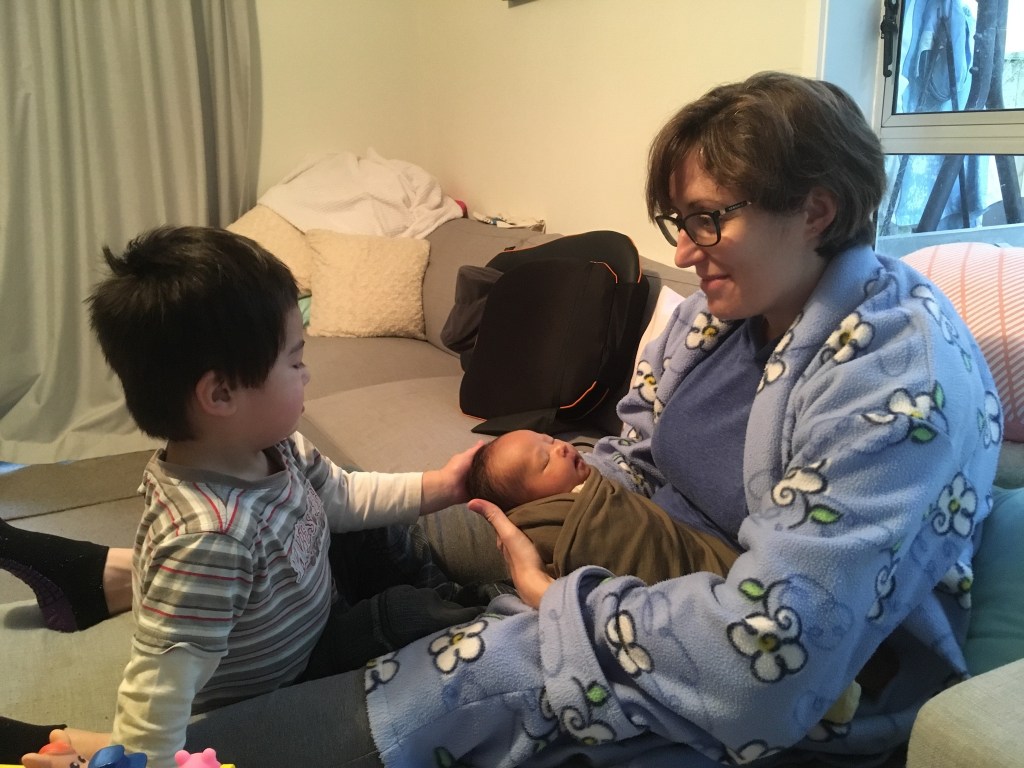
It’s watching your toddler struggle to handle knowing his mother is no longer there for him. It’s silent tears in the night, wishing you could be there to comfort both boys, while knowing you can’t.
It’s realising the impossibility of being there for two boys, who each now live in different suburbs. It’s trying so hard to split yourself in two, to be there for both, that you get sick yourself from the level of strain on you.
It’s looking forward to an afternoon alone of “special time” with your toddler at an indoor playground. Only to find your toddler completely disintegrates and screams at the top of his lungs, hitting his head repeatedly against a rubbish bin. It’s being asked by other mothers, “Do you need help?” And wanting to laugh insanely. But explaining calmly – instead – that you’ve been in hospital for weeks and your toddler is venting all of his fears and anger on you. It’s being let out the fire alarm door and setting off fire alarms because the owner of the establishment is so desperate to get you out of there, and your child is in no state to be carried back through all of the other parents and children.
It’s watching your baby vomit, and vomit, and vomit, and knowing you’ve got to take your screaming toddler to daycare so that you can rush your baby with bronchiolitis back to hospital. It’s watching while your toddler crushes your neck in a stranglehold, pleading and screaming with you, not to drop him off. While your baby waits in the daycare reception in a capsule on a monitor for his breathing and all the instructions you quickly gave were – “If the monitor alarms – call an ambulance.” And once again, it’s feeling your heart severed down the middle. Feeling utterly torn, that you simply can not be there for both boys. It’s handing your toddler over, watching him cry so hard he vomits too. It’s fleeing daycare, ready to utterly and absolutely shatter and cry yourself. And maybe vomit too, it suddenly feels appealing to join the crowd!
And finally, it’s packing yourself back up, mentally and emotionally. Piling all of the emotions, issues, struggles and fears into a little space, stuffing them all in, pushing them down, and straining to close the zip. So you can present… for one more day… that you can do this.
As I shared my story, tears trickled down my cheeks. It was painful to share this memory with my mentor. But when I looked at her for her reaction, I was amazed. Tears flowed freely down her cheeks as well as she listened to me.
Something gently, yet deeply, touched my heart. When do people have the capacity to not only listen to your pain, but cry with you?
This woman was in her seventies. She was a widow, with grown children and grandchildren. She was also an immigrant. She moved her with her husband from England in her twenties. New Zealand was her home now, but you could never mistake her English heritage. As tears crept their way gently down her face, I was moved.
There was nothing we could do to change the situation I described. To be honest, I don’t even remember what it was. But I have never forgotten the power of having a friend cry with me. It has forged a depth of relationship and mutual empathy that is hard to describe. The Bible says to “Be happy with those who are happy, and weep with those who weep.” (Romans 12:15 NLT) Often it’s easier to find someone who will celebrate with you in the good times than someone who will stand with you when times get tough.
Recently I have been reflecting on the power of empathy. Empathy doesn’t just sympathise with another’s pain or experiences; the person listening feels like they are experiencing the same emotions. According to the Oxford Dictionary, empathy means “the ability to understand and share the feelings of another”. What would our world look like if more of us had empathy for the journeys of those around us?
There are so many areas of this world that is in pain. I think of Syrian refugees, fleeing their country in desperation, hoping for a chance to live and provide for their families elsewhere. If we watched people we loved dying around us as a result of a civil war, wouldn’t we do all we could to protect those we love? Empathy means getting to the same level as someone else and relating to their journey. It means choosing to listen to them. Also choosing not to judge them. Instead, honouring them as fellow human beings who have faced struggles and choices, like all of us.
Recently my husband showed me an incredible amount of empathy. I had been struggling with a lot of stomach pain for weeks. One night the pain was so bad it felt like being stabbed in my stomach. I curled up on the floor to try relieve the pain and I sobbed. Soon I realised my husband had joined me on the rug on our floor. He lay next to me and held me and stroked my hair as I alternately cried and stiffened at times with the pain.
It’s not an experience I ever want to repeat. I hate pain – physical or emotional. I do all I can to avoid pain! Yet the effect of having my husband join me in on the floor amongst my pain felt like incredible love and empathy. I feel almost indebted – in a good way – with just how much love my husband has shown me recently as I haven’t felt well.
Thankfully the pain eased and eventually I felt perfectly fine again. Go figure. But those moments I’ve experienced empathy become like precious flagstones I never want to forget.
In the Bible in John 15:13 (NLT) it says “There is no greater love than to lay down one’s life for one’s friends.” Sometimes I think in a Western context that verse can be hard to grasp. We’re not faced with daily persecution where to love Jesus means we could be killed that day. But I feel my husband gave me a glimpse of that. He had his own things he wanted to achieve with his evening. Instead, he put aside his own agenda and plans, and set himself to understanding what I was going through.
I am so thankful we have a Saviour in Jesus Christ whose very nature is defined by love. 2 Corinthians 1:3-4 (NLT) declares “All praise to God, the Father of our Lord Jesus Christ. God is our merciful Father and the source of all comfort. He comforts us in all our troubles so that we can comfort others. When they are troubled, we will be able to give them the same comfort God has given us.” God empathises with us.
Some people don’t like to show weakness. They feel it makes them appear vulnerable. What I love about God is that He doesn’t judge us for our weakness. (Doing something wrong is different; we do need to pray and ask God’s forgiveness – and sometimes the people we’ve wronged too – to make the situation right, but I’m talking about weakness in the sense when we feel down or show vulnerability with where our hurts are).
If you are going through a painful situation right now, know that God “heals the broken-hearted and bandages their wounds” – Psalm 147:3. You don’t have to pretend with God. You can tell Him how you really feel. Ask Him for His help. He is not going to judge you for going through a season of pain, in whatever form that looks. Even if the pain is the result of your own poor choices. He will always hold you close and comfort you, even as He directs you to a better path in future.
I often lean on the verse from Isaiah 40:28 (NLT) “…No one can measure the depths of his understanding.” People can be rude and unkind. All of us have the capacity to hurt each other. But I love knowing that when I feel unfairly criticised or hurt I can come to the God of all comfort, and the God whose understanding no one can fathom. I know God understands me. He knows my heart and my very thoughts (Psalm 139). Even if people misunderstand a situation and cause us hurt, God knows where each of us is coming from and why both parties may have reacted the way they did.
If you let Him, God would love to come into your situation and bring healing. Only He knows what you need. Why don’t you invite Him into your situation and see what He will do?






 Navigating Life's Curveballs